
Basketball court resurfacing in Hawaii involves more than choosing a new color and repainting the lines. Sun, humidity, salt air, rainfall, soil movement, and the court’s daily use all affect what work is appropriate. Whether you manage a school, HOA, resort, or private court, start with the condition of the existing surface and the needs of the people who use it. For a broader overview of resurfacing decisions across court types, see our court resurfacing and construction services.
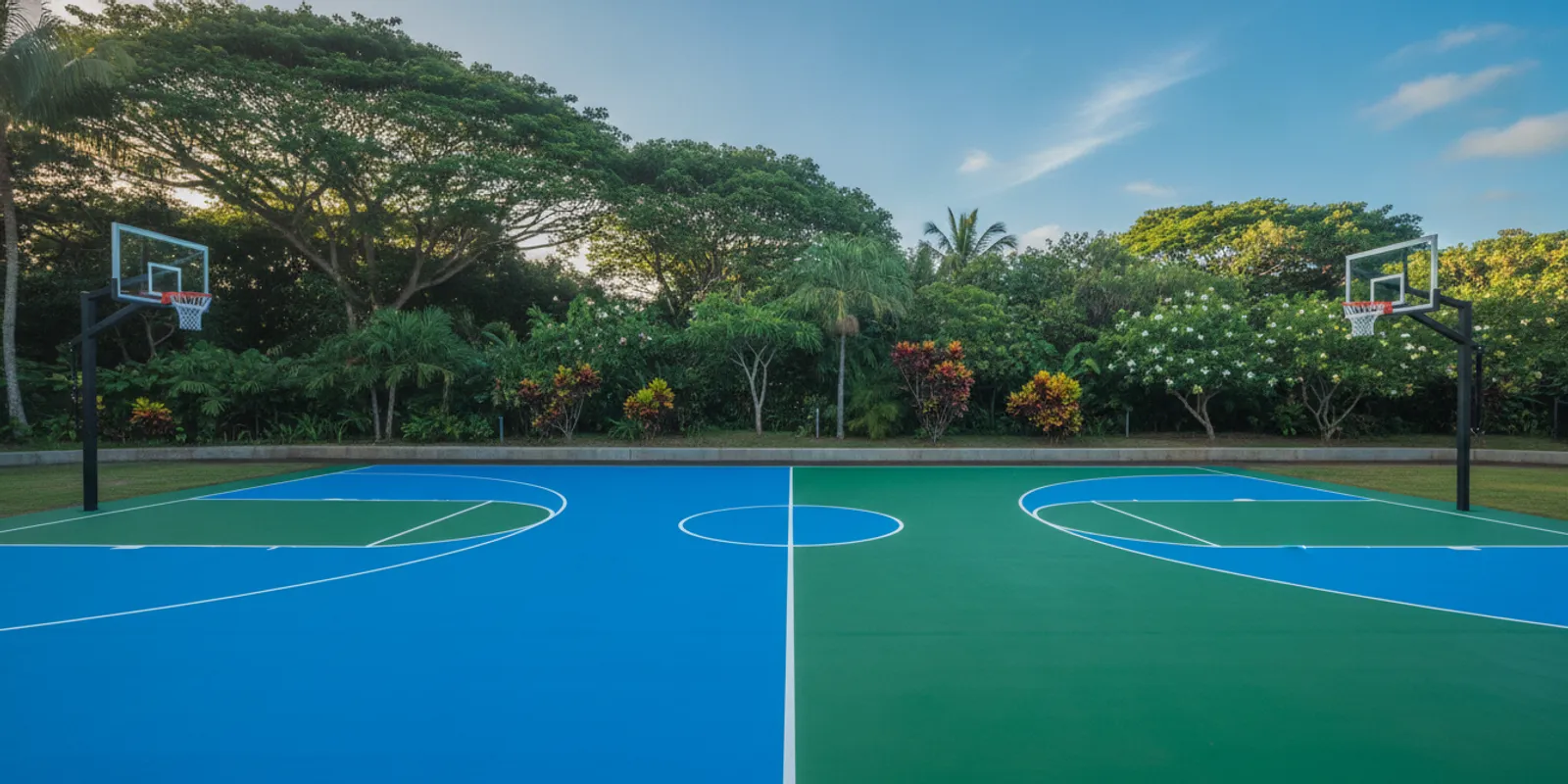
Why Hawaii Basketball Courts Need Special Resurfacing Materials
Outdoor courts in Hawaii face a combination of conditions that can wear on coatings and expose weaknesses in the base. Strong UV exposure, humidity, salt air, and rain matter when choosing materials and planning the work. The ground beneath a court matters too. Volcanic and coral soils can move, while nearby roots may contribute to cracking. A new coating cannot solve every underlying problem.
That is why resurfacing should begin with an evaluation, not a color decision. A specialist needs to look at the surface, note cracks and uneven areas, understand how water moves across the court, and ask how the facility is used. A crack that returns after a quick patch may call for a different repair approach than a small, stable surface defect. If cracks or changes in level are present, ask how they will be addressed before new coatings and lines are applied.
Hawaii Court Resurfacing uses a proprietary crack-filling and leveling system designed for Hawaii’s expansive volcanic and coral soils and root damage. This is intended to address the local conditions behind some court cracking; it is not a promise that a court will never crack again. Ask the estimator to explain what they observed, which repairs are included, and what the proposed system is designed to do on your specific court.
Coating selection should also match exposure and use. Hawaii Court Resurfacing is an authorized SportMaster installer and works with court coating systems selected for Hawaii’s climate. A well-planned scope considers the existing surface, preparation, crack repair, leveling needs, color coating, and striping together. See the company’s basketball court resurfacing service for information specific to basketball facilities.
Be cautious of proposals that describe only a fresh topcoat. Ask what preparation is included, how cracks will be treated, and whether any areas need more extensive repair. Those details help you compare scopes on a like-for-like basis instead of choosing by color or a single bottom-line number.
Indoor vs. Outdoor Basketball Court Resurfacing in Hawaii
“Basketball court” can describe very different surfaces. Many outdoor courts use an asphalt or concrete base with an acrylic sports coating. Indoor courts may have wood, synthetic flooring, or another system. The resurfacing method must suit the existing surface; an outdoor acrylic coating is not automatically appropriate for an indoor floor.
| Planning factor | Outdoor court | Indoor court |
|---|---|---|
| First question | How are the base, cracks, drainage, and coating holding up? | What is the floor system and which manufacturer or maintenance requirements apply? |
| Environmental exposure | Direct sun, rain, humidity, and salt air may affect the surface. | Indoor exposure differs; ventilation, moisture, and facility use still matter. |
| Common scope considerations | Surface preparation, crack repair or leveling, compatible coating, and exterior line striping. | Confirm the floor type and whether the work is a coating, repair, refinishing, or a specialist floor-service project. |
| Useful records | Repair history, recurring cracks, ponding observations, and photos. | Floor specifications, prior maintenance records, and product or warranty information. |
For an outdoor court, take note of where water remains after rain, whether cracks are changing, and if coating is wearing unevenly. These observations do not replace a site evaluation, but they help focus the conversation. The project scope should distinguish cosmetic wear from defects that require repair before coating.
For an indoor facility, identify the exact floor material before requesting a resurfacing proposal. Wood and synthetic sport floors can have different requirements. Do not assume that an outdoor court resurfacing package is right for an indoor floor. Share the available specifications and ask whether the proposed work is designed for that surface. If the floor needs a specialized indoor system outside the contractor’s scope, get guidance from a qualified provider for that floor type.
Hawaii Court Resurfacing serves multiple court types and offers basketball court resurfacing, but the correct scope still depends on the site and substrate. The company can review the court details and clarify whether the proposed work fits. Its project process explains how discovery, court information, evaluation, proposal, scheduling, construction, and final walkthrough fit together.
Basketball Court Resurfacing for Schools and HOAs in Hawaii
Schools, HOAs, resorts, clubs, and public facilities have a planning challenge that a private owner may not: the court serves a group, and the project must fit around access, communication, and budget decisions. Start by identifying who approves the work and who will coordinate the site. For a school, that may mean aligning facility staff and administrators. For an HOA, it may mean confirming the board’s approval process and communicating any temporary court closure to residents.
Before requesting estimates, gather the basics:
- Use and activity: Is the court used for basketball only, or does it support other sports and community activities?
- Condition: Note visible cracks, worn coatings, uneven areas, and places where water tends to remain.
- Surface details: Share what you know about the base and prior repairs, and provide photos or video if available.
- Access: Explain how crews and materials can reach the court and whether the site has access restrictions.
- Decision process: Identify the approver, budget process, and any requirements for written scope or documentation.
- Scheduling needs: Mention school breaks, events, busy seasons, or other dates that affect access. Confirm any project schedule with the contractor rather than assuming a start window.
These details help an estimator understand the project and prepare a more useful proposal. They also make it easier for a property manager or board to explain why the work is needed. If the court is part of a wider facility plan, mention any related needs such as fencing, windscreens, or equipment installation so that the conversation can consider the site as a whole.
Budget depends on the condition and size of the court, repairs, materials, access, and the work included. As broad project-dependent guidance, smaller projects generally fall around $8,000-$15,000, medium resurfacing or reconstruction projects around $20,000-$50,000+, and full construction or large facilities at $50,000+. These are not a quote or a guaranteed range for a particular basketball court. Request an on-site evaluation and a written scope before setting a final budget.
For boards and administrators comparing proposals, look beyond the final price. Confirm whether surface preparation, crack repair, leveling, coatings, striping, and cleanup are included. Ask how the contractor will communicate changes if site conditions differ from what was visible during the initial review. Hawaii Court Resurfacing provides service across Oahu, Maui, the Big Island, Kauai, Molokai, and Lanai; its company background offers more information about its work and approach.
Surface Colors, Line Striping, and Court Marking Options
Color and line choices are most effective when they are planned after the court’s condition and intended use are understood. A basketball-only court needs clear basketball markings. A shared-use court may need multiple sets of lines, which should be laid out so players can tell them apart. Discuss the activities the facility wants to support before approving a final layout.
Color affects the court’s appearance and can help distinguish playing zones, but design should not distract from legible markings. Ask to review the proposed color scheme and line plan before work begins. Confirm which sport lines are included, what colors will distinguish them, and whether existing markings should be kept or changed. For a new facility or a major redesign, the court design configurator can help start a design conversation.
It is also useful to check existing court dimensions and marking requirements before approving new lines. If the court is used by a school, league, or organized program, identify the applicable layout expectations with the organization responsible for play. The FIBA Venue Guide explains that its basketball venue guidance covers court markings and dimensions, while the governing organization for your program may set the requirements that apply to your facility. Do not rely on a contractor to guess which rules your facility follows. Confirm the plan in writing, especially when different sports share one surface.
For shared courts, ask how the layout will balance visibility and play. Too many overlapping lines can make a court harder to read. There may be practical tradeoffs between preserving basketball as the primary use and accommodating other activities. A clear plan should show the colors and markings, not just describe them in a proposal.
Maintenance planning matters after the work, too. Keep a record of the coating system, colors, repairs, and completion date. That information can help facility staff describe later changes and plan future evaluations. Ask the contractor what care is appropriate for the specified system rather than applying generic cleaning or repair advice to every surface.
What the Resurfacing Process Looks Like for a Basketball Court
A dependable resurfacing project is a sequence of decisions and site work, not simply a crew applying color. Hawaii Court Resurfacing describes a nine-step process from contact through final walkthrough. The details below show what owners and facility managers can prepare for at each stage:
- Initial contact and discovery: Explain the facility, court type, location, goals, and concerns. Mention whether the project is resurfacing, repair, conversion, or new construction.
- Share photos or video: Provide clear views of the full playing area and close-ups of cracks, worn patches, edges, and other problem spots. Note when or where the condition appears to change.
- Site evaluation: A site review helps assess surface condition, repair needs, access, and other factors that affect the proposed work. Photos are useful context, but do not substitute for inspecting the court.
- Custom written quote: Review the work included, materials, preparation, repairs, coating, striping, and any exclusions. Ask questions before approval so the scope is clear.
- Design and color selection: Confirm the color scheme, sport markings, and layout. Get approval from the people responsible for the facility.
- Scheduling and deposit: Coordinate access and project timing. When payment terms are relevant, a 50% deposit secures scheduling and material ordering, with the remaining 50% due after completion and customer approval.
- Construction and resurfacing: The crew completes the agreed preparation, repair, and surface work. Keep the area accessible only as directed by the project team.
- Final walkthrough: Review the completed work with the contractor, check the agreed scope, and raise questions before closing out the project.
Each court and facility is different, so avoid assuming that a standard number of days or a particular start date applies. Weather, existing conditions, access, and project scope can affect scheduling. Ask for an expected sequence and confirm the details directly with the contractor. If you manage a facility across multiple courts or islands, share that early so logistics can be discussed as part of the plan.
Before approving a proposal, use a short checklist:
- Does the proposal describe the court’s current condition and the repairs needed?
- Are surface preparation, coatings, line striping, and any selected colors clearly included?
- Does it identify work that is excluded or may require a change if uncovered?
- Have access, site coordination, and scheduling expectations been discussed?
- Do you know who will answer questions during the project and lead the final walkthrough?
For examples of completed work, browse the court project portfolio. If your facility needs a different court type as well, the company also provides tennis court resurfacing and pickleball court resurfacing.
Request a Basketball Court Evaluation
Frequently Asked Questions
How do I know if a basketball court needs resurfacing?
Look for worn or faded coating, visible cracks, uneven areas, or water that remains on the surface. These signs do not all call for the same repair. A court evaluation can help distinguish surface wear from issues that need crack repair, leveling, or more extensive work before coating.
Can an outdoor basketball court be converted for more than one sport?
Shared-use layouts may be possible, but the court’s dimensions, condition, intended activities, and marking plan all matter. Decide which sports the facility needs to support, then review the proposed line layout and colors before approving the work.
How much should a facility budget for basketball court resurfacing?
Costs depend on the court, its condition, repairs, materials, access, and project scope. General project guidance ranges from around $8,000-$15,000 for smaller projects to $20,000-$50,000+ for medium resurfacing or reconstruction, with full construction and large facilities at $50,000+. An evaluation and written proposal are needed for a project-specific amount.
Does the same resurfacing system work indoors and outdoors?
No. The right approach depends on the existing floor. Outdoor acrylic courts and indoor wood or synthetic floors are different surfaces with different requirements. Identify the floor type first and confirm that the proposed materials and work are suited to it.
A clear evaluation and written scope help you plan basketball court resurfacing around the condition of the court, the needs of its users, and the realities of your Hawaii facility.