
A salt resistant court surface in Hawaii is an acrylic court system selected and installed with coastal exposure, moisture, sunlight, and the condition of the underlying court in mind. Salt-resistant binders and anti-fungal properties can be part of a suitable material system, but no coating eliminates maintenance or corrects structural movement by itself.
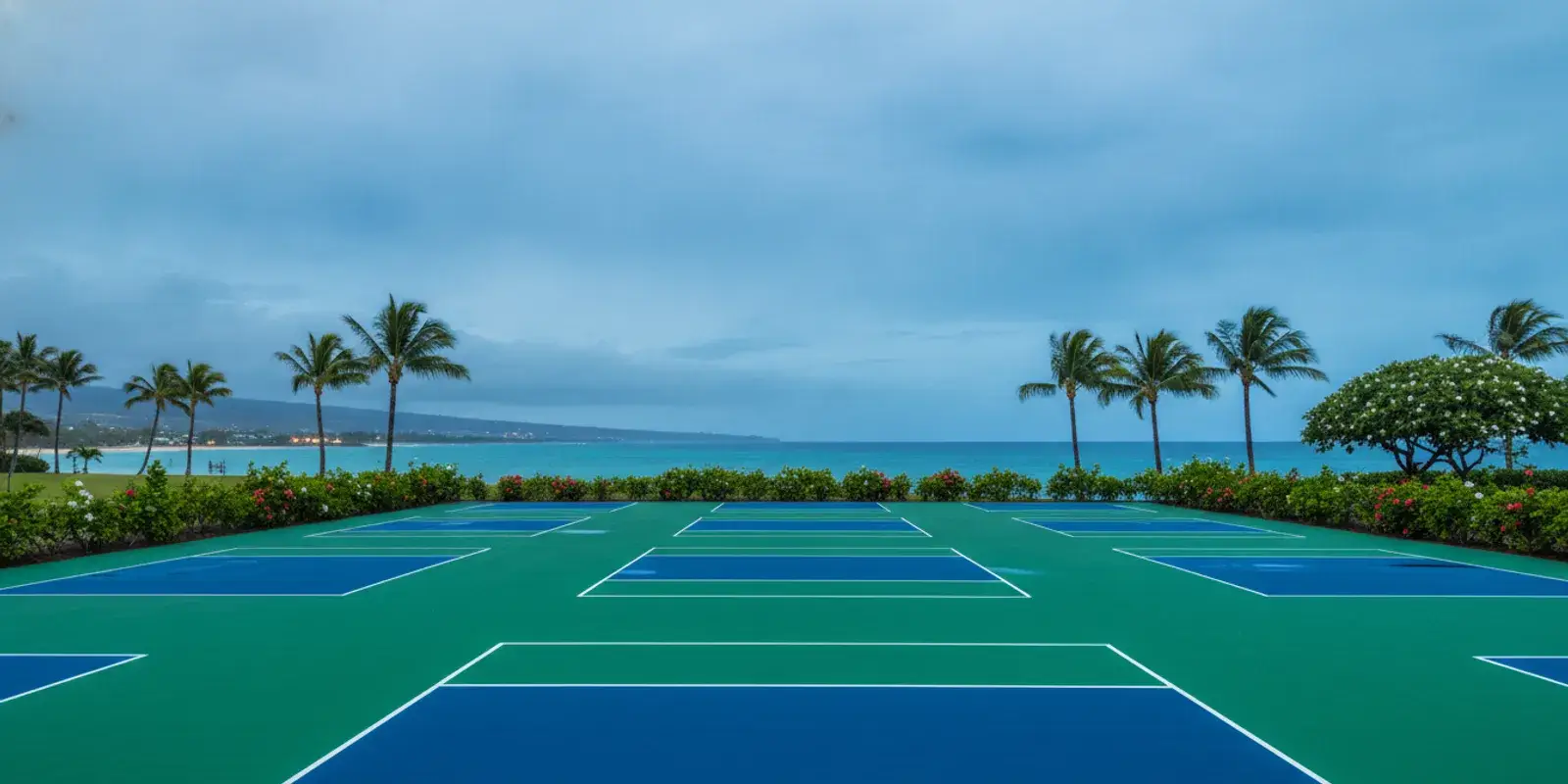
For homeowners, HOAs, resorts, schools, and facility managers, the best choice is not simply the product with the most impressive label. The full decision includes the existing surface, drainage, cracks, intended sport, exposure to salt air and rainfall, preparation requirements, and the installer’s familiarity with local conditions. Hawaii Court Resurfacing serves Oahu, Maui, the Big Island, Kauai, Molokai, and Lanai as Hawaii’s #1 Court Specialist.
This article focuses on how to evaluate acrylic surfacing materials, not on diagnosing every cause of court cracking. Soil movement, roots, and surface condition still matter when choosing any finish. Start by documenting what you see and asking for a site-specific assessment before treating a new coating as the answer.
What Makes a Court Surface Salt-Resistant and Why It Matters in Hawaii?
A salt-resistant court surface uses coating materials and a complete installation approach intended to better tolerate coastal exposure; it does not make the whole court impervious to salt, water, or wear. Salt in sea air can reach exposed outdoor courts, while Hawaii’s UV exposure, humidity, and rainfall also influence how a surface is used and maintained. Material selection should therefore be considered alongside surface preparation and the base beneath the coating.
Salt-resistant binders are one feature to ask about when comparing acrylic systems. The binder helps hold the coating components together. For a court near the coast, it is reasonable to ask the installer what products are specified for salt exposure and whether those products are intended for athletic court use. The answer should identify the system and explain how it fits your court, rather than promise that salt damage cannot occur.
Consider the site as a whole. A court may be open to sea air, shaded by trees, exposed to strong afternoon sun, or located where water collects after rain. Each condition affects the questions to ask. For example, a persistently damp shaded area may need a different maintenance discussion from a sunny, wind-exposed court. The coating is one layer in a court system, not a substitute for correcting underlying conditions.
A short site inventory makes those discussions more useful. Walk the perimeter after a typical rain if it is safe to do so, and note where water flows, where it remains, and whether leaves or soil wash onto the playing area. Record which sides face the prevailing wind or open coast, where shade falls during the day, and whether any portion stays damp longer than the rest. These observations do not diagnose a problem, but they give the installer concrete details to evaluate. For a school or resort, include staff observations about the areas that need frequent cleaning or are difficult to keep open during wet periods.
- Salt exposure: Ask which acrylic materials and binders are selected for coastal conditions and how the system is maintained.
- Sun and heat: Discuss UV exposure and color choices, and ask what the specified system is designed to address.
- Rain and drainage: Identify ponding, runoff paths, and damp areas before selecting a resurfacing scope.
- Movement and cracks: Have existing cracks and level changes evaluated. A new color coat alone is not a reliable answer to recurring movement.
- Use: Confirm the court’s sport, expected use, and line layout so the finish and markings match the facility’s needs.
Hawaii Court Resurfacing describes its acrylic coating materials as having enhanced UV resistance, anti-fungal properties, and salt-resistant binders. The company is also an authorized SportMaster installer. Those features are relevant to material selection, but they should not be mistaken for a guarantee against all algae, mold, cracking, fading, or maintenance. Ask how the proposed system addresses your specific court and what conditions remain outside the coating’s control.
When cracks or uneven areas are part of the concern, material selection should follow a condition review. Hawaii’s volcanic and coral soils can move, and roots can affect courts. The company’s proprietary crack-filling and leveling system is designed for Hawaii’s expansive volcanic and coral soils and root damage. Read more about how the court evaluation and work process operates before comparing finish materials alone.
Understanding Acrylic Resurfacing Systems Designed for Coastal Climates
Acrylic resurfacing is a layered approach to renewing the playable finish of an existing court. The scope can include preparation, crack repair or leveling where needed, acrylic coatings, color, and new sport lines. The exact work depends on the existing court. A material name by itself does not describe the complete system or confirm that a court is ready for resurfacing.
Start by asking what is included in the proposed system. A useful explanation identifies the surface preparation, repairs, coating products, colors, and line work. It should also explain which existing conditions could affect the result. If the court has recurring cracks, loose material, standing water, or signs of movement, request an evaluation of those issues before treating the finish as the only problem.
It can help to separate the project into three decisions. First, determine whether the existing base and playing area need repair or leveling. Second, confirm the coating materials and layers proposed for the court. Third, agree on the final color, sports, and line layout. Keeping these decisions distinct prevents a discussion about color from obscuring questions about preparation or repairs. It also lets an owner compare proposals on like-for-like work: if one includes crack repairs and another excludes them, the two prices do not describe the same scope.
- Review the existing court. Note visible cracking, wear, low spots, drainage concerns, and areas that stay damp. Photos and video can help begin a discussion, but they do not replace an appropriate site evaluation.
- Define the intended use. Confirm whether the facility needs tennis, pickleball, basketball, volleyball, or multi-sport lines and use. For conversions, ensure the proposed layout fits the available area.
- Clarify repairs and preparation. Ask what repairs are recommended, why they are included, and whether any observed movement or drainage issue needs separate attention.
- Identify the acrylic materials. Request the coating-system details, including what is being proposed for UV, salt, and fungal growth concerns. Ask what each component does in plain language.
- Confirm the finish and markings. Review color choices and line plans before work. Ensure that the sport layout and equipment needs are addressed in the scope.
- Compare the full proposal. Look at included work, assumptions, exclusions, and warranty terms, rather than comparing only a surface-material label or one line-item price.
For a court that is otherwise sound, full resurfacing may be an appropriate way to renew the playing surface. Where there are deeper cracks, level changes, drainage problems, or other site concerns, the proposal may need to address more than the coating. See the company’s court resurfacing and maintenance services and its tennis court resurfacing information for examples of the service categories to discuss.
Not every acrylic system is intended for every court or condition. The decision should be based on the site and a defined scope, not a broad claim that one material works everywhere. For an independent industry resource on sports facility planning and construction, consult the American Sports Builders Association. Use a qualified court professional to apply general guidance to the actual surface and project.
How Anti-Fungal Coatings Prevent Mold and Algae on Hawaii Courts
Anti-fungal properties in a court coating are intended to help resist fungal growth, but they do not mean that mold or algae can never appear. Moisture, shade, debris, drainage, and routine cleaning all matter. In Hawaii’s humid and rainy conditions, the right question is how the specified coating fits into a broader plan for keeping the surface clean and usable.
Some parts of a court may stay damp longer than others. Areas below trees or beside landscaping can collect leaves and organic debris. Shaded edges, low spots, or locations where water does not drain as expected may also need attention. A coating cannot correct a persistent water source or remove debris on its own.
Think of maintenance as a repeatable observation routine, not a one-time response to visible growth. During regular facility checks, note where leaves, dirt, or other debris accumulate, whether water appears to drain as expected, and whether any damp or discolored area keeps returning. Remove ordinary debris using the care methods approved for the surface, and ask the installer for written guidance on cleaning products and tools. Avoid improvised chemicals, abrasive equipment, or pressure settings unless the surface and product instructions allow them. If growth reappears quickly or the surface changes, document the location and timing and seek advice rather than assuming the coating has failed or applying a stronger cleaner.
When discussing anti-fungal material options, ask the installer to explain:
- Which coating components have anti-fungal properties and what that feature is intended to do.
- Whether site shade, drainage, or nearby vegetation may contribute to recurring growth or dampness.
- What routine cleaning and care the chosen surface requires.
- Whether the recommended work includes only surface renewal or also addresses an observed site condition.
Avoid assuming that visible dark or green areas have a single cause or that a stronger coating is automatically the solution. Have the surface assessed, especially if growth returns quickly or appears alongside cracking, peeling, or standing water. Get the maintenance instructions for the proposed system in writing and follow the product and installer guidance rather than using unapproved cleaning methods.
Material selection also needs to account for the activity on court. A school, resort, HOA, or private owner may have different usage patterns and cleaning routines. Explain who uses the facility, how often it is used, and which sports and markings are needed. That context helps the contractor discuss a practical surface and maintenance plan without promising that any coating will prevent all future growth.
SportMaster Surfaces: Why Authorized Installer Status Matters
An authorized installer relationship can help a property owner understand which system is being specified and who is applying it. Hawaii Court Resurfacing is an authorized SportMaster installer. For a facility comparing proposals, that status is one useful point to verify alongside the written scope, site assessment, surface preparation, repair plan, and warranty terms.
Authorization should not replace project-specific questions. Ask which SportMaster products are proposed, how they will be used in the layers, and why they fit the court’s condition and exposure. Request that the materials and work scope be identified in the proposal. Also clarify which repairs are included before the surfacing is applied.
Consider the full project rather than selecting a coating in isolation. A well-documented proposal should make clear:
- The sports and line layout the court will support.
- The condition issues observed and the repairs included in the scope.
- The specified acrylic coating materials and intended finish.
- What is excluded or may require a separate decision.
- Applicable written warranty terms and what they cover.
Hawaii Court Resurfacing emphasizes more than 10 years of craftsmanship and experience with thousands of courts in Hawaii. It uses trained, full-time in-house crews and offers a written warranty. Ask for the project-specific warranty and scope details; coverage and work are defined by the applicable proposal, not by general descriptions alone. You can also review the company’s background and company information and its court project examples.
How to Evaluate Surface Material Options for Your Hawaii Court
Use a side-by-side comparison to ensure each proposal answers the same questions. A court manager should be able to understand what the product choice means for the actual facility, what repairs are included, and what will happen if the site has conditions beyond the coating itself.
| What to compare | Questions to ask | Why it matters |
|---|---|---|
| Coastal exposure | Which materials or binders are specified for salt exposure? What does the claim mean for this site? | Clarifies how the proposal addresses the court’s location without treating it as salt-proof. |
| UV and color | What coating system and color are proposed? How is UV exposure considered? | Connects the finish choice to sun exposure and the property’s appearance goals. |
| Fungal growth concerns | Which components have anti-fungal properties, and what care is still required? | Sets realistic expectations about moisture, cleaning, shade, and maintenance. |
| Existing cracks and levels | What cracks or uneven areas were observed? What repairs or leveling are included? | Separates surface renewal from work needed to address court condition. |
| Water and drainage | Are there ponding or runoff concerns? Does the proposal address them or identify them as separate? | Helps avoid mistaking a coating choice for a drainage solution. |
| Sport use and lines | Which sports, court colors, and line layouts are included? | Ensures the completed surface is planned around actual facility use. |
| Scope and warranty | What is included, excluded, and covered in writing? | Makes proposals easier to compare and clarifies project expectations. |
After collecting proposals, check whether they address the same court area and the same repairs. Mark any unresolved questions beside the relevant line item: a stated material with no product-system details, a repair allowance without a description, or a warranty reference without written terms all deserve clarification. For an HOA or school, identify who will approve the color, layout, and final scope, and circulate those choices before work is scheduled. A simple written comparison helps prevent a committee from choosing on one price alone when the included preparation or repair work differs.
Investment varies with project condition and scope. Smaller projects generally fall around $8,000 to $15,000, medium resurfacing or reconstruction projects around $20,000 to $50,000 or more, and full construction or large facilities at $50,000 or more. These are broad project-dependent ranges, not a guaranteed quote. Repairs, court size, access, selected work, and site conditions all affect the proposal.
When you request an estimate, share the island and location, court type and approximate dimensions if known, intended sports, visible cracks or damp areas, and any photographs or videos. Mention whether you manage a private court, HOA or condominium facility, resort, school, government or military property, park, or club. Hawaii Court Resurfacing typically answers inquiries within 24 hours. Its process moves from discovery and information gathering to site evaluation, custom quote, design and colors, scheduling, construction, and a final walkthrough.
For pickleball conversion or resurfacing questions, see the company’s pickleball court information. For a broader look at selecting a design and layout, its court design configurator may help you think through options before discussing the project.
Book a Call to Discuss Your Court
Frequently Asked Questions
Does salt-resistant mean a court coating cannot be damaged by salt air?
No. Salt-resistant describes a material feature intended to better suit coastal exposure, not immunity from wear or damage. Ask which materials are specified and how the complete court system and maintenance plan fit the site.
Can anti-fungal acrylic coating stop all mold or algae?
No coating should be presented as a guarantee against all growth. Shade, moisture, debris, drainage, and cleaning matter too. Ask which components have anti-fungal properties and what care the system requires.
Can acrylic resurfacing repair cracks in the court?
Resurfacing may include crack repair, but the appropriate method depends on the crack and underlying condition. If movement, roots, or level changes are involved, ask for an evaluation and a clearly described repair scope instead of assuming that a new finish will solve the cause.
What should I compare in two court surfacing proposals?
Compare site findings, preparation, repairs, specified materials, colors and lines, exclusions, and written warranty terms. Confirm that both proposals address the same sports, surface condition, and facility needs.
Choose a Surface Based on the Whole Court
The right salt-resistant, anti-fungal acrylic surface for a Hawaii court is the one selected for the real site conditions and installed as part of a clearly defined plan. Compare the coating features, but also assess cracks, drainage, sport use, preparation, and maintenance. That approach gives your facility a more useful basis for deciding whether resurfacing is appropriate and what the project should include.