
A well-planned basketball court cleaning routine in Hawaii starts with the surface, its surroundings, and how the court is used. Rain, humidity, salt air, vegetation, and regular play all influence what collects on an outdoor court. A consistent routine can clear loose debris and help staff notice changes, but cleaning cannot repair cracks, correct drainage, or renew a worn coating. Match the method to the existing surface and treat recurring problems as a reason to investigate, not simply to clean harder.
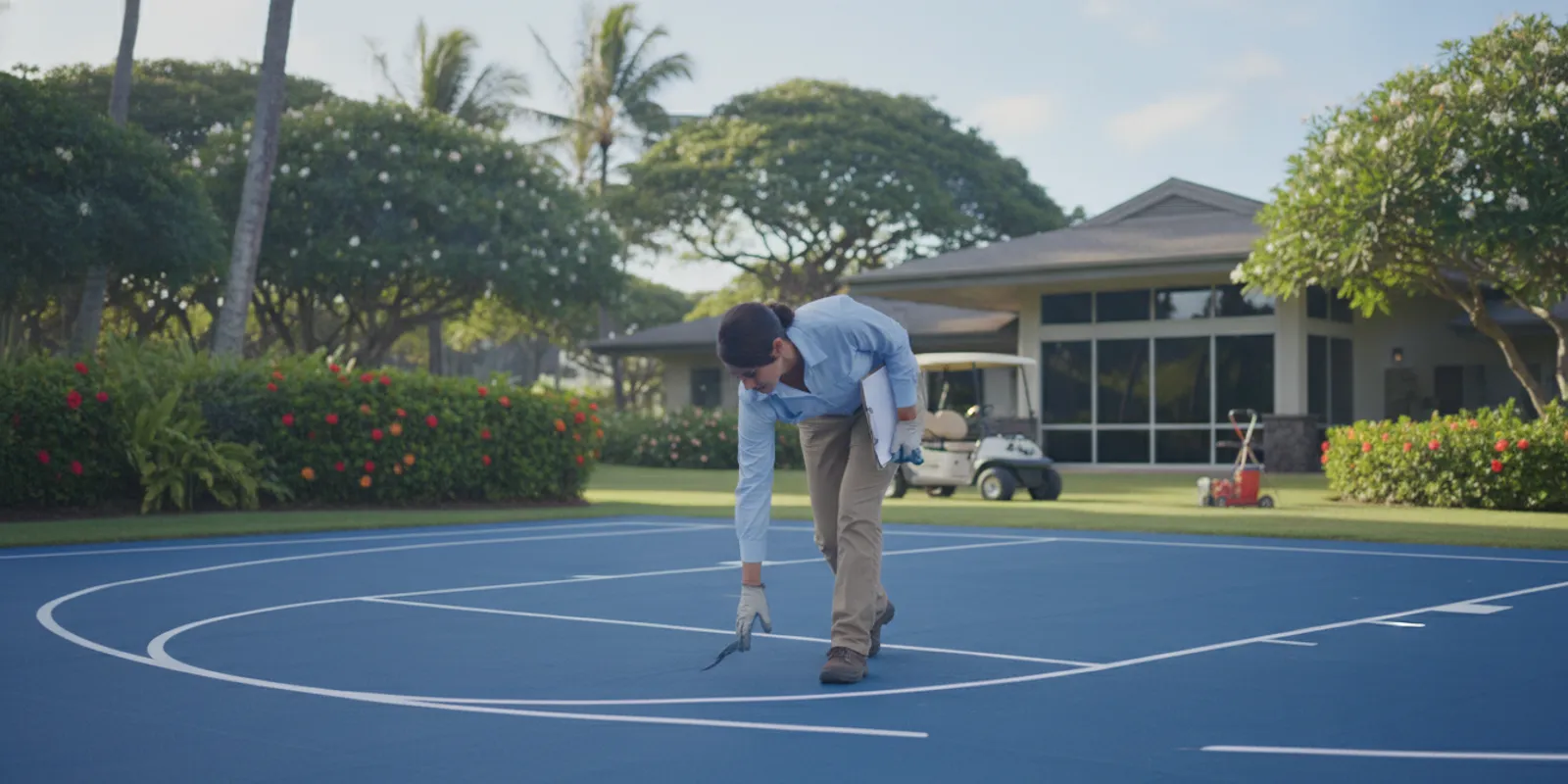
How should Hawaii facilities plan basketball court cleaning?
Routine care has two purposes: keep the playing area clear of ordinary debris and give a facility team a regular opportunity to observe the surface. A clean appearance is useful, but it does not establish that the coating, base, or drainage is sound. Likewise, a stain does not automatically mean the entire court needs renewal.
Practical goals include clearing leaves, seed pods, grit, and other loose material; addressing ordinary dirt with a suitable method; checking for wet spots and recurring water; and noticing changes such as cracks, peeling coating, faded lines, or uneven areas. Staff should distinguish routine cleaning from repair work. If a problem persists after an appropriate method, record it and seek a closer review rather than escalating chemicals or pressure without guidance.
Before each cleaning, ask what is actually on the court and what condition the surface is in. Dry leaves call for a different response from a stuck-on residue. A weak or unfamiliar coating should not be treated like a sound surface whose care instructions are known. Keep access paths reasonably clear as well, since paths and nearby landscaping can carry soil and debris onto the playing area.
Which Hawaii conditions affect basketball court cleaning?
There is no single calendar for every island or facility. A shaded school court near trees may collect and retain different material from an open resort court or a coastal facility exposed to wind. Rainfall, airflow, vegetation, traffic, and drainage all influence what staff see. Use observations from the actual site rather than assuming every court needs the same frequency or method.
Humidity and rain can leave damp areas where drainage or airflow is limited. Leaves and seed pods may hold moisture against the surface. Sand and grit may arrive from nearby paths, and coastal exposure can leave visible salt deposits on exposed surfaces or fixtures. Those are reasons to monitor and document the court, not proof that any particular chemical, coating, or pressure setting is suitable.
Make a simple site sketch and mark where debris gathers, where water lingers, and where the surface has changed. After rain or wind, staff can check those locations first and take dated photos from consistent viewpoints. A manager of multiple sites can use one record format while noting local differences such as shade, nearby trees, or runoff paths.
- Vegetation: Note where leaves, blossoms, or seed pods collect.
- Shade and moisture: Identify corners that remain damp after the rest of the court dries.
- Drainage: Track where water runs, pools, or carries soil onto the playing area.
- Coastal exposure: Check for salt and windblown material on the surface and fixtures.
- Use: Consider play volume, shared sports, and how people bring grit onto the court.
Hawaii Court Resurfacing serves Oahu, Maui, the Big Island, Kauai, Molokai, and Lanai. The company works on basketball and other sports courts and is an authorized SportMaster installer. Its proprietary crack-filling and leveling system is designed for Hawaii’s expansive volcanic and coral soils and root damage. Those capabilities are relevant when routine upkeep reveals a condition that may require repair, but a site-specific evaluation is needed to determine the appropriate scope. Learn more about the company and its court work.
How can a facility set up a repeatable cleaning routine?
A practical routine is specific enough to keep methods consistent and simple enough for staff or volunteers to follow. Assign responsibility, identify approved tools, record findings, and set a check rhythm based on site conditions and use. This is a planning framework, not a fixed schedule for every facility.
- Walk the site first. Locate loose debris, stains, standing water, cracks, and areas where dirt enters the court. Check surrounding paths and landscaping too.
- Remove loose material. Use tools that will not scratch the surface or snag markings. Avoid dragging heavy or sharp objects across the playing area. If using a blower, consider where the debris will go.
- Address stuck-on dirt cautiously. Follow available care instructions for the surface or coating. Test a proposed method in a small, inconspicuous area. If the coating is unknown or its limitations are unclear, ask a court professional before using a chemical or aggressive method.
- Use water thoughtfully. Consider runoff and nearby landscaping. Do not assume pressure washing is safe. Pressure, distance, nozzle, surface condition, and coating all matter, and forceful cleaning can harm a weak or lifting surface.
- Wait for drying and check the court. Follow product directions and facility procedures. Before reopening, confirm that the surface is dry and clear of tools, hoses, and residue.
- Record the result. Note the date, areas cleaned, tools or products used, unusual conditions, and changes since the last check. Take dated photos of recurring concerns from consistent positions.
Choose an interval staff can maintain and adjust it as local conditions change. A grounds team might add a quick debris check after heavy rain or wind and include a closer surface review in its regular maintenance walk. A school could coordinate the check with campus operations; a hotel or resort could assign it during grounds rounds. The important point is that someone owns the task and knows how to report a hazard or surface change.
For shared maintenance, write down which tools and products are approved, who can authorize a change in method, and who receives reports of a crack, unsafe wet area, or damaged coating. That prevents different workers from applying untested products to the same surface. Separate routine tasks from issues that may need prompt attention. Debris can be removed during ordinary upkeep; visible separation or a recurring pool should be documented and assessed rather than concealed.
If cleaning closes the court, communicate the closure and reopening conditions to players and staff. Reopen only when the court is dry and clear, consistent with product directions and facility procedures. If the condition raises a safety concern, follow the facility’s process for restricting access until it has been assessed.
What equipment and methods should managers compare?
Start with the debris and the condition of the surface. A broom may be enough for loose leaves. A soft brush and water may suit some ordinary dirt, but confirm compatibility first. Cleaning products, powered equipment, and pressure washing require more care. This table is for planning and does not replace specific surface or product instructions.
| Method | Potential use | Planning considerations | Use extra caution when |
|---|---|---|---|
| Dry sweeping or suitable blowing | Loose leaves, dust, and light debris | Choose tools that will not scratch or snag; consider where wind will carry debris. | Debris could reach players, traffic, neighboring property, or drains. |
| Soft brush and water | Some ordinary dirt on a compatible surface | Confirm surface guidance, manage runoff, and allow drying before play. | The coating is worn, peeling, cracked, or unfamiliar. |
| Cleaning product | A specific residue, if approved for the surface | Read directions, test a small area, and consider nearby landscaping. | The product could affect coating, color, lines, plants, or drainage. |
| Pressure washing | Only when surface condition and manufacturer guidance allow a controlled method | Technique and pressure must suit the material; seek advice if uncertain. | There is peeling, separation, open cracking, or a weak or unknown coating. |
| Professional evaluation | Recurring water, cracks, coating failure, or concerns not resolved by routine care | Describe the issue, share photos, and ask what review or repair scope fits. | Do not keep increasing cleaning force instead of investigating a surface problem. |
Cleaning costs depend on court size and condition, access, requested work, and whether separate repair is needed. Do not compare a basic debris removal task with a proposal that includes treatment or repairs as if they are the same scope. For larger work, ask how the court will be evaluated and what is included. The company’s project process overview can help owners understand how a project may be discussed.
When is cleaning not enough?
Cleaning may make a concern easier to see, but it cannot correct structural movement or renew a failed coating. Seek a closer review when the same issue returns, the surface changes, or the court no longer performs as expected. Document signs such as:
- Cracks that are new, widening, or appearing in several areas.
- Coating that bubbles, peels, flakes, or separates from the layer beneath.
- Water that repeatedly remains in the same places after rain.
- Uneven areas, possible root impacts, or changes in level.
- Lines or colors made difficult to see by significant wear.
- Areas that remain slippery or discolored after appropriate cleaning and drying.
These observations do not identify a cause by themselves. A recurring puddle may involve slope or drainage, while cracking may reflect movement beneath the surface. Hawaii Court Resurfacing’s proprietary crack-filling and leveling system is designed for Hawaii’s expansive volcanic and coral soils and root damage. Whether that or another approach is suitable depends on the actual court and a proper evaluation. No cleaning routine or repair method should be presented as a promise that future movement will never occur.
Keep routine maintenance distinct from repair or renewal. If the court needs more than cleaning, ask whether localized work, full resurfacing, or another scope is appropriate. Photos and a log help explain what changed but do not replace a site review. See the company’s court project portfolio for examples of its work; an example is not automatically the right recommendation for another court.
How should a facility document court cleaning and condition?
Good records make recurring conditions easier to recognize and explain to staff, boards, or a contractor. A simple log can be kept with existing facility records. Make sure everyone knows how to report a concern before it becomes urgent.
- Record the date, weather, and areas cleaned.
- List the tools or products used and any care instructions followed.
- Note standing water, unusual debris, and changes in appearance or feel.
- Take dated photos of recurring areas from consistent viewpoints.
- Track known repairs, resurfacing, and available product information.
- Document reported hazards and access restrictions while the court is wet or under review.
For an HOA or condo association, a log can support budget discussions and separate routine care from a possible capital project. School and resort teams can add court checks to existing facility procedures. A property manager responsible for several sites can use the same fields while recording the differences between locations.
When comparing a larger project, share the island, court type, observed condition, and clear photos. Ask the provider to separate cleaning from surface preparation, crack repair, coating, striping, or construction. If a design decision is part of the broader project, the court design tool may help with design choices, but cleaning decisions should be based on the existing surface and its condition.
What should managers ask before approving cleaning or repair?
Before approving work, ask what the scope includes and excludes. A cleaning visit should not be described as repair unless repair is explicitly included. For a larger project, request a clear explanation of the observed condition, recommended method, and practical limits.
- Which court areas are included, and what preparation is expected from facility staff?
- Which tools, water, or cleaning products are proposed, and are they suitable for this surface?
- How will runoff, nearby landscaping, drying, and access be handled?
- Does the proposal cover cleaning only, or also inspection or repair?
- What findings could lead the contractor to pause and discuss a change in scope?
- How will the work and observations about the court be documented?
- If repair or resurfacing is recommended, what options fit the condition, intended use, and available budget?
Project investment depends on the work required and the court’s condition. As broad planning guidance, smaller projects generally fall around $8,000 to $15,000, medium resurfacing or reconstruction projects around $20,000 to $50,000 or more, and full construction or large facilities at $50,000 or more. These figures are not prices for routine cleaning or guaranteed quotes. A site-specific proposal should reflect the actual scope.
Compare like with like. One proposal may cover debris removal, while another includes preparation, crack repair, coating, and striping. Ask whether a recommendation assumes a particular surface condition and how additional findings will be discussed before work changes. A maintenance log and dated photos help ground that conversation in recurring conditions rather than a single recent cleaning.
For general sports-facility planning, the American Sports Builders Association is an industry resource. Use general information alongside the care instructions for the actual surface and a site-specific professional review when conditions warrant one.
Hawaii Court Resurfacing works across the major Hawaiian islands and provides services for basketball and other sports courts. When requesting a review, share the island, court type, what you have observed, and any access constraints. Inquiries are typically answered within 24 hours. You can also explore the company’s basketball court services and court service options to understand the broader scope.
Frequently asked questions
How often should an outdoor basketball court be cleaned in Hawaii?
There is no universal interval. A court shaded by trees, exposed to wind, or used heavily may need attention more often than a sheltered court with little debris. Inspect the site, remove loose material as it accumulates, and adjust the routine based on what the log shows.
Can I pressure wash a basketball court?
Do not assume pressure washing is safe for every surface. The coating, its condition, pressure, distance, and technique all matter. Check available surface guidance and seek qualified advice when the coating is peeling, cracked, weak, or unfamiliar.
Does cleaning remove cracks or standing water?
No. Cleaning may clear debris that blocks a drainage path, but it cannot correct an underlying slope, movement, or structural issue. Document cracks and recurring puddles, then seek an evaluation rather than cleaning more aggressively.
What should I share when asking for a court review?
Share the island and facility type, the court’s sport and approximate condition, when the issue appears, and whether it changes after rain or cleaning. Photos of the full court and close-ups of specific concerns help explain the issue, though an on-site review may still be needed.
A practical basketball court cleaning plan keeps the playing area clear and helps managers recognize when routine care is no longer enough. Match the method to the surface, document recurring issues, and seek a site-specific evaluation when cracks, coating changes, or drainage concerns persist.